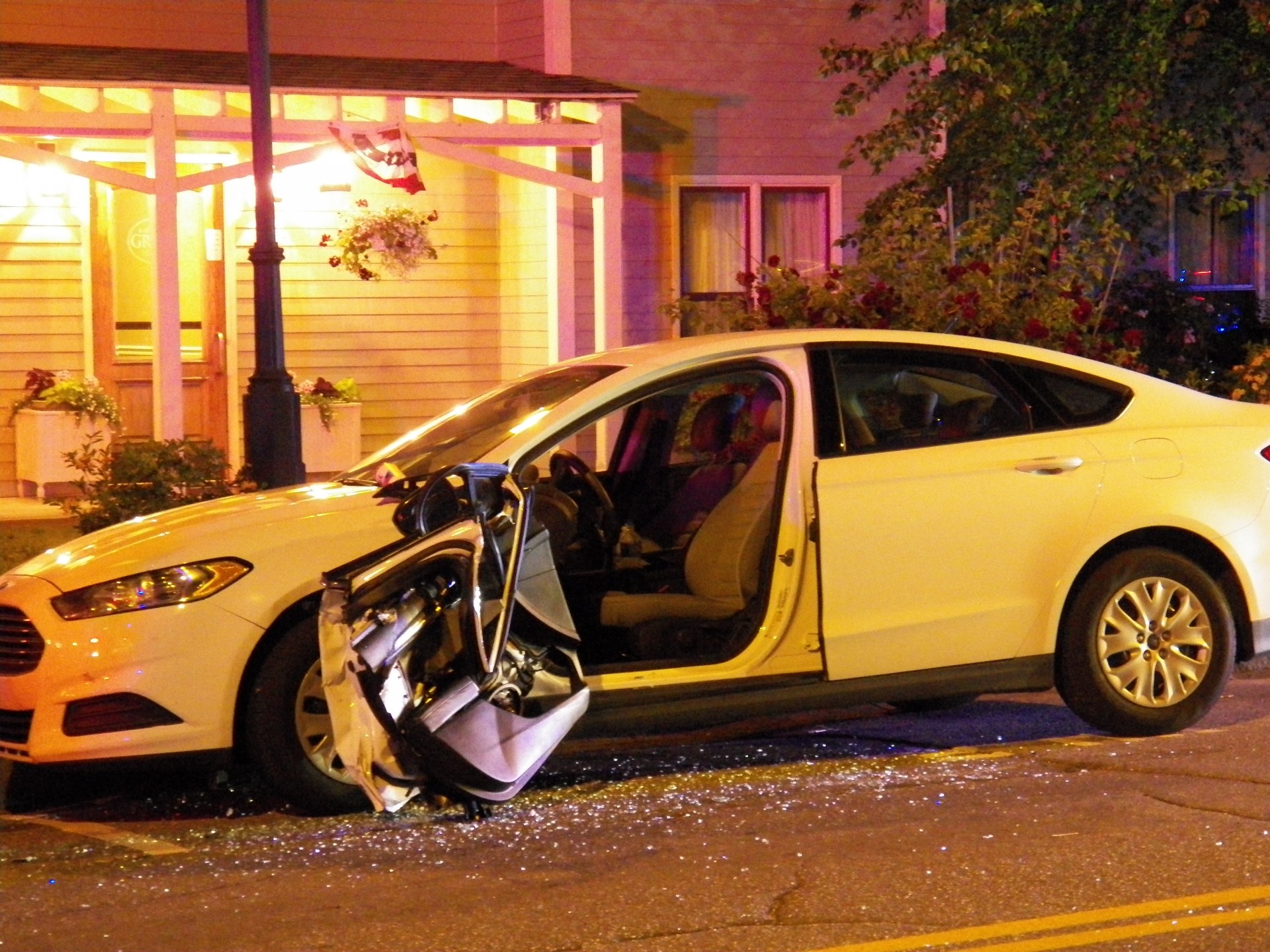

You have just been in a collision, blue lights fill your rearview mirror, and an officer starts asking about alcohol. One question races through your mind: Does a DUI with injury automatically mean a felony - and prison time? For drivers across Los Angeles, Orange, Riverside, and the surrounding counties, that fear is immediate and palpable.
This article cuts through the uncertainty. It explains how California Vehicle Code 23153 distinguishes misdemeanors from felonies, identifies potential penalties, and shows why swift, strategic legal guidance can make all the difference. Here at The H Law Group, we protect our clients’ rights and liberties, ensuring everyone we represent is treated with dignity and relentless advocacy.
Remember, an arrest or charge is not a conviction. California law presumes every person innocent until proven guilty, and the outcome of any case turns on evidence, procedure, and advocacy - not mere allegations. The details ahead provide general information, not legal advice. For guidance tailored to your circumstances, consult qualified counsel in confidence.
Understanding VC 23153 is the critical first step - because the statute itself holds the key to whether prosecutors pursue a misdemeanor or a felony. Let’s begin by unpacking what “DUI causing injury” truly means and why impairment, negligence, and bodily harm intersect so powerfully in California courtrooms.
Driving under the influence that results in harm to someone else is treated very differently from a routine DUI. According to California Legislative Information, “It is unlawful for a person, while under the influence of any alcoholic beverage, to drive a vehicle and concurrently do any act forbidden by law, or neglect any duty imposed by law in driving the vehicle, which act or neglect proximately causes bodily injury to any person other than the driver” in its Vehicle Code 23153. In short, prosecutors must link three ideas - impairment, some traffic violation or negligence, and an injury - to elevate an ordinary DUI into “DUI causing injury.”
Impairment can stem from alcohol, drugs, or a combination of both. The statute expressly covers drivers with a blood-alcohol content (BAC) at or above 0.08 percent, drug-related impairment, or any mix of the two. That means you do not need to blow over the legal limit to face this charge if an officer alleges you were under the influence of drugs.
To secure a conviction, the State generally must establish all four of the following:
Causation is frequently the battleground. Even when chemical tests indicate impairment, the prosecution must still prove your specific driving conduct - not another driver’s mistake or an unavoidable road hazard - caused the injuries.
Before diving deeper, here are a few core concepts that appear repeatedly in these cases:
• Wobbler: A crime the prosecutor may charge as either a misdemeanor or a felony, depending on the circumstances.
• Bodily injury: Any physical harm to another person, ranging from minor bruises to significant trauma.
• Proximate cause: A legal link showing the defendant’s act or omission set in motion the chain of events that produced the injury.
• Rebuttable presumption: A legal assumption that stands unless the defense shows evidence to the contrary - for example, the law presumes a driver’s BAC at the time of driving matches a chemical test taken within three hours, but that can be challenged.
California law also establishes a three-hour BAC presumption: if a chemical test within that window shows 0.08 percent or higher, jurors may presume the same level existed when you drove. Yet skilled defense can undermine that presumption by scrutinizing testing timelines, equipment calibration, and physiological factors.
So, does every crash-related DUI become a felony? That answer depends on how prosecutors view the facts, injury severity, and your prior record - issues we explore next.
California labels VC 23153 a wobbler offense. That means prosecutors may treat the same underlying conduct as either a misdemeanor or a felony, depending on the evidence, the injuries, and the driver’s record. A felony filing is never automatic; it is a strategic choice the district attorney makes after weighing aggravating and mitigating factors. Early advocacy can influence that decision before formal charges are set.
The State may lean toward a misdemeanor complaint when:
Nima Haddadi, Founder and DUI Defense Expert at The H Law Group, underscores why timing matters: “The sooner we can dissect police reports, witness statements, and medical records, the sooner we can show prosecutors that the injuries - or the fault - aren’t as clear-cut as they first believe.”
Prosecutors are far more likely to pursue felony charges when:
A driver with two prior DUIs who allegedly breaks a red light, injures two passengers, and registers a high BAC presents facts that typically push a case squarely into felony territory. While every prosecution is unique, these patterns illustrate why the same statute can yield drastically different consequences.
Now that charging decisions are clear, the next question is sobering: What punishments can follow each path of prosecution?
Penalties under VC 23153 scale quickly. Whether the allegation is a misdemeanor or a felony, judges must weigh the defendant’s record, the severity of harm, and any extra sentencing enhancements before imposing punishment. The ranges below are general; the precise sentence in any case can rise or fall based on the facts the prosecution proves.
In California, a DUI with injury under VC 23153 can be charged as either a misdemeanor or a felony, and the potential consequences are very different. A misdemeanor VC 23153 typically carries 5 days to 1 year in county jail, fines from about 390 to 1,000 dollars plus penalty assessments, 3 to 5 years of informal (summary) probation, and DUI school that can range from 3 to 30 months. A felony VC 23153, by contrast, exposes a driver to 16 months, 2 years, or 4 years in state prison, fines up to 5,000 dollars plus assessments, and usually 3 to 5 years of formal probation or parole. In both misdemeanor and felony cases, judges can order DUI education programs, but felony-level cases usually require the longer 18‑ or 30‑month programs. License consequences also escalate: a misdemeanor conviction can bring a suspension of up to 3 years, while a felony conviction can lead to revocation of up to 5 years and a Habitual Traffic Offender designation. In either scenario, courts must order restitution to injured people, but felony-level cases often involve higher restitution amounts and a greater risk of additional civil lawsuits.
Sentencing courts still retain discretion. Mitigating factors - such as a spotless driving history or swift restitution - can reduce time behind bars, while aggravators can push sentences toward the upper end of each range.
Nima Haddadi emphasizes, “Penalties escalate fastest when injuries are serious or when prior DUIs exist, but those same factors also give us more room to challenge enhancements or negotiate alternatives if we build a compelling record early.”

Seemingly small facts can add major prison time. Allegations of great bodily injury add three to six years, and if several people are hurt, each additional victim can tack on another year. Repeat DUI convictions within ten years trigger longer state-prison terms and a mandatory designation as a habitual traffic offender, restricting driving for three more years.
Beyond the courtroom, collateral fallout looms large. A revocation can keep a driver off the road for up to five years, while insurance premiums routinely double or worse. Career-licensing boards may launch their own investigations, and restitution orders can endure long after any jail term ends. If a crash turns fatal, prosecutors may bypass VC 23153 entirely in favor of vehicular manslaughter or even second-degree “Watson” murder charges - offenses carrying far stiffer penalties.
Understanding these layers of punishment highlights why strategic defense is essential. The next section explains how we can challenge the government’s case and, in some instances, reduce a felony filing to a less severe outcome.
A strong defense begins long before trial. Effective counsel probes every piece of evidence, challenges faulty procedures, and presses the prosecution to meet its burden beyond a reasonable doubt. The goal is clear: secure the strongest possible outcome while safeguarding the client’s constitutional rights.
Seasoned attorneys attack the State’s theory from multiple angles:
“Prosecutors often treat an injury report as an open-and-shut indicator of guilt, but when we dissect the timeline, the physics of the crash, and the medical records, the narrative can shift dramatically,” Haddadi explains. His experience as a former prosecutor helps us identify weak links that can dismantle the State’s causation theory.
Accurately contesting injury severity is equally important. Soft-tissue complaints or delayed-onset pain may not rise to significant bodily harm, and medical experts can clarify whether alleged injuries stem from the collision or a pre-existing condition.
Under California’s wobbler framework, prosecutors may agree to refile as misdemeanors - or judges may later grant a Penal Code 17(b) motion - when injuries are minor, blood-test evidence is shaky, or mitigating factors favor a lesser charge. Paraphrasing Justia’s statutory summary, first-time VC 23153 offenders typically face state-prison exposure only if the case proceeds as a felony; otherwise, potential punishment can include county jail time of as little as 90 days, fines starting at $390, and probation - a stark contrast to felony outcomes. Post-conviction, completing probation without violations can also position a defendant for a 17(b) reduction, restoring certain civil rights and improving future employment prospects.
Haddadi adds, “The clock starts the moment you’re arrested. Every hour you wait is an hour the prosecution is building its case - make sure someone is building yours.”
By taking these steps, you focus on protecting your freedom, reputation, and future - well before any court date arrives.
A DUI with injury under VC 23153 is highly fact-specific. Whether prosecutors file a misdemeanor or felony depends on evidence of impairment, causation, injury severity, and any prior convictions. Early, strategic defense work can expose weak points in each of those areas, shift charging decisions, and limit long-term fallout.
Here at The H Law Group, we have secured more than 7,000 charge dismissals, maintain a 92 percent trial success rate, and have earned over 800 five-star reviews - results that reflect disciplined preparation and relentless advocacy, not guarantees of future outcomes. “Every case is a life, and every life deserves a defense that leaves no stone unturned,” Haddadi reminds clients.
If you or someone you love faces a DUI with injury allegation, safeguard your future now. Call +1 (888) 499-4948 or email info@thehlawgroup.com to schedule a free, confidential consultation with our dedicated defense team serving Southern California. Your rights and freedom deserve a firm that treats you like family and fights for the strongest possible defense.

Yes. Having a felony does not automatically disqualify you. Public housing authorities must evaluate factors like the nature and severity of the offense, how much time has passed, evidence of rehabilitation, and your rental history before making a decision.
A felony DUI charge can be challenged in several ways, such as questioning the legality of the traffic stop, disputing the accuracy of breath or blood tests, or proving there was no impairment. An experienced attorney will review the case and explore all potential defenses.
Penalties for a DUI can include fines, license suspension, mandatory alcohol education programs, community service, probation, and jail time. The severity of the penalties often depends on whether it is a first or repeat offense.
A DUI can remain on your criminal record for several years, typically ranging from 5 to 10 years, depending on state laws. A DUI may affect future employment opportunities, insurance rates, and more.
A felony DUI conviction can remain on your criminal record permanently, which can impact future employment opportunities, housing, and other aspects of your life. Some states allow for expungement or record sealing, but this is not always available for felonies.